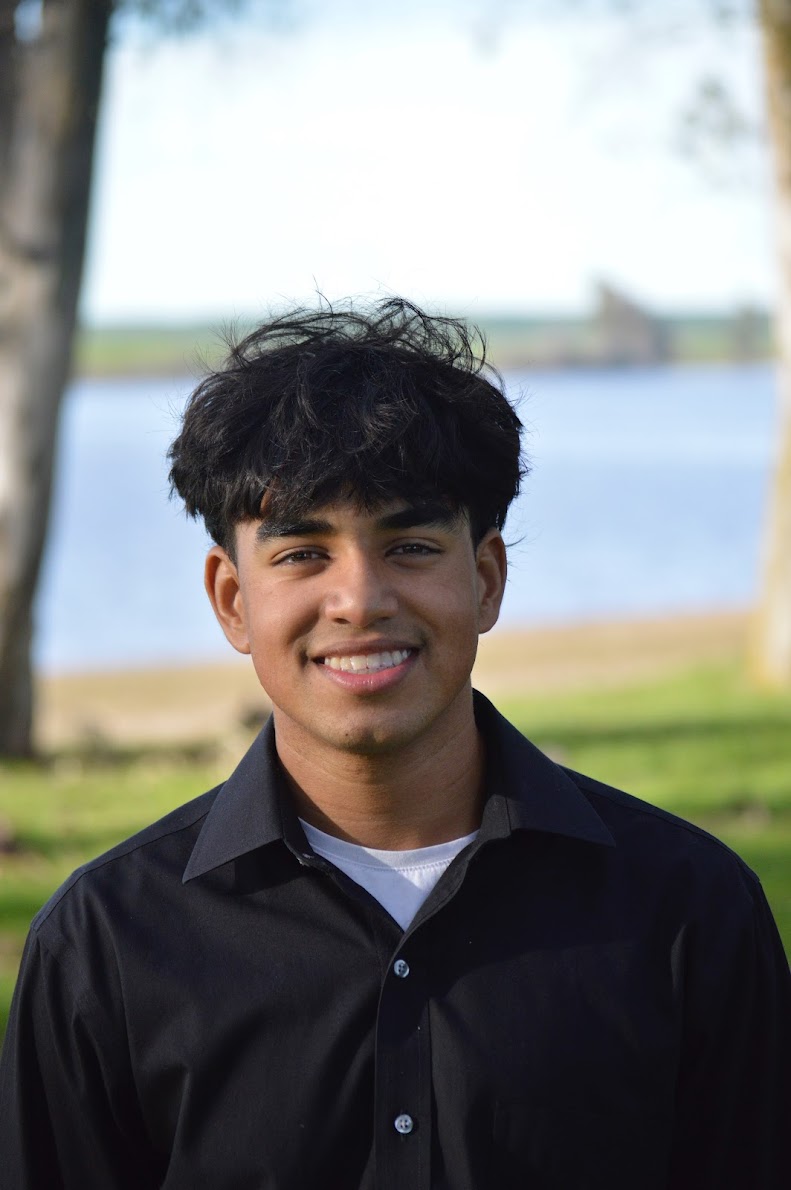
Aman Nindra
ML Systems • Robotics • AI Infrastructure
Computer Science & Engineering student at UC Merced building autonomous robotics, computer vision, and shared GPU training systems.
About
I'm Aman Nindra, a Computer Science & Engineering student at UC Merced. I build machine learning systems that have to work outside a notebook — models wired to real hardware, real users, and real infrastructure.
Right now I'm focused on two systems: an autonomous bicycle, an embedded lane-keeping and steer-by-wire research platform built on Jetson edge inference, and a self-hosted distributed training platform that schedules PyTorch jobs across shared GPU machines.
What interests me most is the engineering side of ML — training, deployment, monitoring, and the question of how to make a system reliable, fast, and usable, not just accurate. I'm looking for ML engineering, robotics, computer vision, and AI infrastructure opportunities.
Currently Working On
Autonomous Robotics
A low-speed autonomous bicycle using Jetson edge inference, road/lane segmentation, and steer-by-wire control.
Distributed AI Training
A self-hosted platform for shared GPU training jobs, queue management, job isolation, and VRAM-aware scheduling.
Applied ML Systems
Computer vision, NLP, and infrastructure projects built with PyTorch, FastAPI, AWS, and Linux.
Education
University of California, Merced
B.S. Computer Science & Engineering
Featured Projects
Strongest work — click GitHub links for source code.
Autonomous Bicycle
Embedded lane-keeping and steer-by-wire platform for low-speed self-driving — UC Merced Honors Program research.

Building a street-legal autonomous bicycle as a low-speed self-driving research platform. A Jetson Nano Super runs YOLOv8 road/lane segmentation to compute a drivable area and target heading, which an ESP32-S3 control hub verifies against IMU data and executes through a custom steer-by-wire actuator and 250W motor. Hard-wired brake relays act as a failsafe that instantly returns control to the rider.
Wildlife Camera Trap Classification
Top 4 finish — Vision Transformer on 16.5K camera-trap images.

Ranked Top 4 in a wildlife image classification competition across 8 species and 16.5K camera-trap images. Trained Vision Transformer models with mixed precision, class-weighted loss, and DistributedDataParallel on AWS SageMaker. Achieved about 91% validation accuracy and outperformed a ResNet18 baseline.
Self-Hosted Distributed AI Training Platform
Web platform for launching PyTorch jobs across shared GPU machines.
Building a web platform for launching PyTorch training jobs on shared GPU machines. The system uses FastAPI, React, Kubernetes, and GPU-aware scheduling to route workloads based on available VRAM and compute. Current focus: job isolation, queue management, logs, and failure handling for multi-user training.
AI Emotion Intelligence Engine
BERT fine-tuned for 28-label emotion classification on GoEmotions.
Fine-tuned BERT-base for 28-label emotion classification on GoEmotions. Improved multi-label performance using per-emotion threshold calibration instead of a single global cutoff. Achieved macro F1 around 0.64–0.70, with stronger recall on minority emotion classes.
Experience
Software Engineering Intern • Remote
Shipped a cross-platform Flutter/Dart app for emotion tracking across 25+ screens. Built modular UI components, standardized state management, improved responsive layouts, and reduced duplicated UI code by about 40%.
Project Manager, Code Agent • Merced, CA
Scoped and led Code Companion, an AI-powered Python debugging tool that ingests GitHub repositories, runs flake8/mypy checks, and suggests LLM-generated fixes with explanations. Defined MVP scope, metrics, and the roadmap for a Next.js, FastAPI, and pgvector stack.
Project Manager, Research Copilot • Merced, CA
Managed Research Copilot, a RAG-based assistant that ingests PDFs and arXiv links, retrieves relevant passages with hybrid search, and answers questions with citation-grounded responses. Designed the system architecture and evaluation plan around answer quality, latency, and pilot feedback.
Technical Skills
ML Systems
Robotics & Vision
Backend & Infrastructure
Frontend
Languages
Resume
Get In Touch
I'm looking for ML engineering, robotics, computer vision, and AI infrastructure internships or research collaborations.